




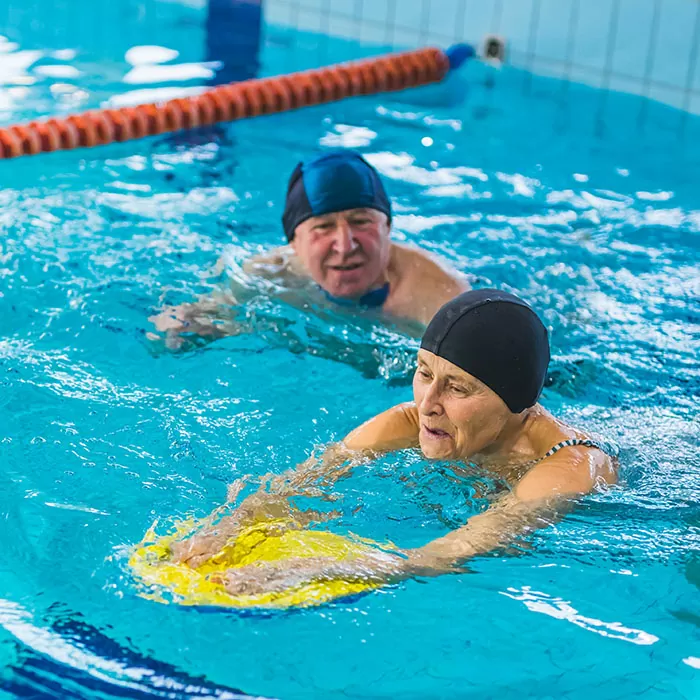
Are you struggling with persistent pain that makes regular exercise a challenge? Have you recently undergone orthopedic surgery and found your rehabilitation exercises more difficult than expected? Or maybe you have an underlying condition, such as osteoarthritis, that causes intense joint pain. If these situations sound familiar, aquatic therapy at Lycoming Physical Therapy could be precisely what you need.
Aquatic therapy is similar to physical therapy — it just takes place in the water rather than out on land. But for many people, this one simple change is exactly what they need to find success.
Why? Because exercising in the water is less stressful on the joints and makes it easier and more tolerable to build strength. It can also be relaxing unto itself!
We offer aquatic therapy to help ensure our patients receive the best possible care, no matter their physical limitations. If you think you might benefit from aquatic therapy, call us to speak to our staff — we’re happy to answer any questions!
___
Who Can Benefit from Aquatic Therapy?
One great thing about aquatic therapy is that it’s accessible to most people. Here are just a few of the conditions that might benefit from aquatic therapy:
• Osteoarthritis
• Chronic pain
• Lower back pain
• Parkinson’s disease
• Post-stroke recovery
• Fibromyalgia
• Orthopedic injuries
• Post-surgical rehabilitation
Aquatic therapy is a particularly good choice for people who struggle with land-based exercise. This is due to water’s buoyancy, which supports your body and removes pressure from the joints. This means that someone who feels as if they can barely move on land may find it much easier to exercise in the water.
Additional Benefits of Aquatic Therapy
Aside from being gentler on the joints, aquatic therapy has a wealth of additional benefits, including the following:
Builds Strength
Exercising in the water may feel easier, but it also works your muscles more. Because water exerts force on the body, simple movements (such as walking or swinging your arm) become resistance exercises when you perform them underwater, meaning you can more easily build strength without using special equipment.
Improves Joint Mobility
Struggling with a restricted range of motion? Because the water supports your joints, aquatic therapy exercises may make it easier to improve your mobility.
Improves Cardiovascular Endurance
Similarly, aquatic therapy challenges your cardiovascular system, helping to improve aerobic capacity without joint pain.
Keeps You Upright
If you struggle with balance and stability, aquatic therapy will actually help you complete your exercises without the risk of falling.
Improves Blood Circulation
Because we keep our pool warm, aquatic therapy helps facilitate blood flow through hydrostatic pressure.
Promotes Relaxation
Many people find simply being in the water relaxing. Furthermore, the warm water helps promote muscle relaxation, which can help with painful muscle spasms.
What To Expect During Your Aquatic Therapy Sessions
In some ways, aquatic therapy is quite similar to land-based therapy. Your first appointment will consist of a comprehensive exam in which we take a complete health history, conduct some simple movement screens, and develop your customized treatment plan.
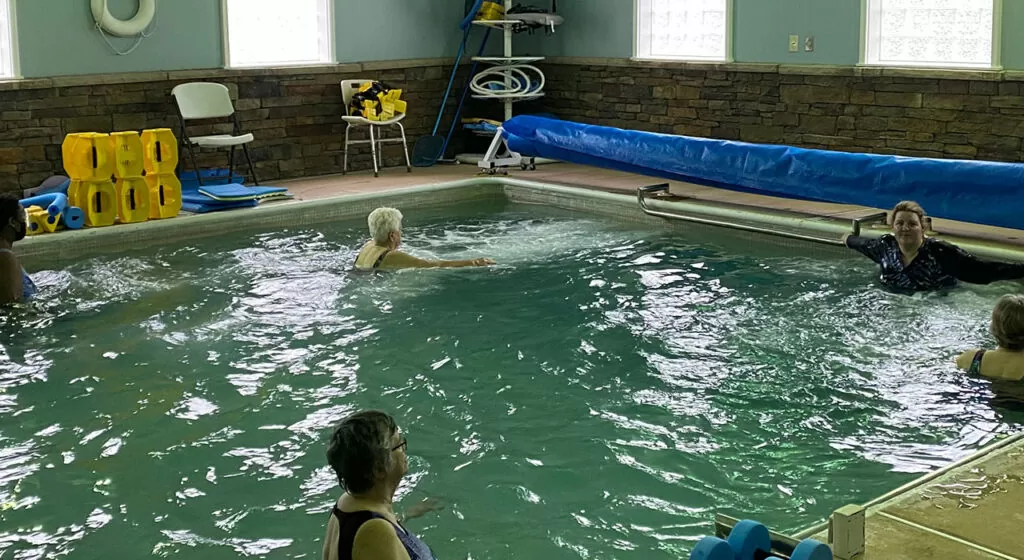
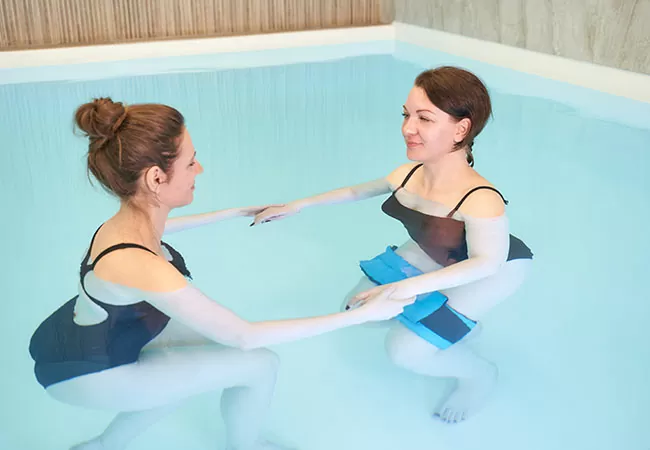
Another similarity is the exercises themselves. Aquatic therapy is not the same as swimming — in fact, you don’t need to know how to swim at all! You’ll typically perform the prescribed movements in waist- or chest-deep water, and many of these exercises (such as leg raises or water walking) are movements you could perform on land.
However, there are some key differences between land and aquatic therapy.
Firstly, your program will occur in our aquatic therapy facilities. This facility is not like the swimming pools at your local recreation center: you won’t find any splashing kids or lifeguard whistles here! Instead, you’ll find gently heated water, specialized therapeutic equipment, and our compassionate aquatic physical therapists, who will guide you through your personal treatment program.
Another difference is that we may utilize specialized equipment, such as pool noodles, water weights, or kickboards, that make effective use of water’s unique properties so you can reap its full benefits. In some cases, we might also have you perform deep-water exercises using flotation devices to keep you aloft as you complete the movements.
Dive Into Aquatic Therapy Today!
Aquatic therapy is a fantastic alternative to land-based physical therapy. If you think you might benefit, call Lycoming Physical Therapy to schedule your initial consultation today — and learn all the ways that aquatic therapy might benefit you!
Meet Shannon Cosentine

Shannon Cosentine, PTA
Becoming a PTA is something I have always wanted to do after helping my Gram recover from an aneurysm, however, I joined the military and explored other career paths before returning to school and following my dream. I enjoy being part of a team with my co-workers and patients to achieve their goals and to provide them the resources to lead a fulfilling life, independently. I also enjoy putting together the puzzle of physical, emotional, and physiological responses to put out the fire and not the smoke. Life experience has brought me significant benefits by providing patient care as a whole and gives me the ability to connect in multiple ways, other than therapist/patient relationships only.
Outside of work you can find me sitting on the sideline at my son’s sporting events, traveling to visit my daughter, running around in the woods or garden, hanging out with friends and family or flopped on the couch with my dog and a good book.
Our Patients Get Great Results
“I am very happy to have had a balance evaluation at Lycoming Physical Therapy! Staff is friendly, accommodating & helpful. My therapist, Thomas, immediately pinpointed areas I need to focus on for strength & stability. Thank you for taking such great care during therapy!”
-Angie F.
Essential Exercises
Pool Wall Superman
Start by standing in a pool facing the wall. Place your hands on the wall and step your feet back until your arms are outstretched and your body is in a straight line in the water. Hold for 30 seconds.



Feel Better by Eating Better!
Sweet & Sour Cauliflower
Easy and healthy Baked Sweet & Sour Cauliflower is a delicious twist on classic sweet & sour chicken or pork and it’s baked instead of fried. You won’t miss meat in this lightened up classic!
Directions:
Preheat oven to 425 degrees. Toss cauliflower and oil in a ziplock bag. Add corn starch and toss to coat again. Transfer cauliflower to a greased baking sheet. Bake for 15-20 min until cauliflower starts to brown on the bottom. Switch oven to broil and cook on high for 3-4 minutes just until tops start to brown. Combine sugar, vinegar, soy sauce, garlic powder, onion salt, and ketchup in a medium sauce pan. Stir and bring to a boil. Whisk together corn starch and cold water in a small bowl until dissolved. Add to pan and stir until thickened, then reduce to low heat. Combine roasted cauliflower and sauce. Serve with steamed rice and top with sliced green onions.
Recipe: www.lecremedelacrumb.com/baked-sweet-sour-cauliflower
Ingredients
- 5-6 cups cauliflower florets
- 3 tbsp vegetable oil
- 1/3 cup corn starch
- 3-4 cups steamed rice, for serving
- Thinly sliced green onions for garnish
- 3/4 cup sugar
- 2 tbsp soy sauce
- 1/2 cup apple cider vinegar
- 1 tsp garlic powder
- 1/2 tsp onion salt
- 1/4 cup ketchup
- 1 tbsp cornstarch
- 2 tbsp cold water